Saturday, November 9, 2013

Top 10 Most Beautiful Hill Stations in Malaysia

It is only recently that Westerners have developed a sense of enjoyment towards our warm, humid tropical weather. But back during colonial times, our hot weather was considered alien and barbaric to our former British colonizers. This is why they developed hill stations in elevated grounds around our country, mainly to escape from the lowlands and its tropical heat. Today, these hill stations now serve as famous vacation sites for both locals and tourists alike. Their rich colonial history further adds to the value of these heritage sites. Here is a list of the top 5 most beautiful hill stations in Malaysia.

10) Janda Baik

This is a traditional Malay village that is only half an hour's drive away from Kuala Lumpur, which makes it the ideal getaway for city folk looking to take some time off from the Klang Valley's hustle and bustle. The village has many campsites that organize motivational courses, obstacle challenges, jungle trekking, water rafting, off road 4 wheel drive, flying fox and abseiling. Picnic spots and waterfalls are also popular choices among tourists.

A beautiful picnic spot

One of the popular waterfalls


9) Tambunan

Often dubbed as the Switzerland of the East, Tambunan is almost always overshadowed by the more popular Kundasang, which is also located in Sabah. Located in the interior division of the state, it is located around 1000 m above ground level. Tambunan is surrounded by terraced paddy fields and bamboo forests. Though Tambunan is famous for its memorials built for local heroes like Mat Salleh and Tun Datu Mustapha, it is most popular for housing the Tambunan Rafflesia Reserve, devoted to the world's largest flower, the Rafflesia.
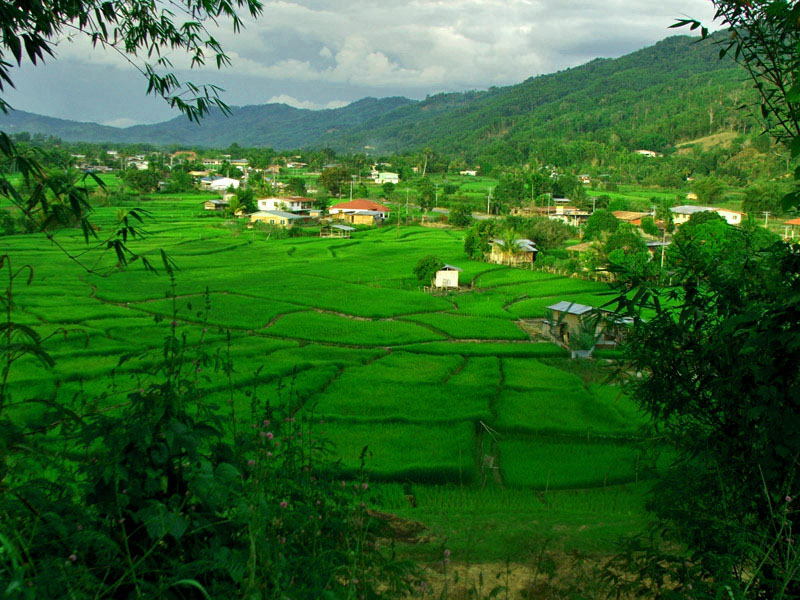
Tambunan Valley

A waterfall at Tambunan


8) Jerai Mountain 

Despite being relatively unknown, Jerai Mountain serves as an interesting visit to those visiting the famous Lembah Bujang archaeological site nearby. At 1200 m, this is highest peak in the northern region of the Malay Peninsula.  Famous attraction include the Forestry Museum, the Sungai Teroi Forest Recreation Park, various jungle trails and some waterfalls. Most of its colonial buildings that make the area resemble an English countryside have been converted into holiday chalets for tourists.

A misty path

Attractive pine trees


7) Maxwell Hill

Also known as Bukit Larut, this is the oldest, wettest and most well-preserved hill station in Malaysia. Built some 1,250 meters above sea level in 1884, this hill station is located around 10 kilometers from the heritage town of Taiping, Perak. This hill station still retains much of its quaint old colonial bungalows and flower gardens. There is also a war cemetery for Commonwealth soldiers who lost their lives during World War II. Though Maxwell Hill is admittedly less developed  compared to the other hill stations on this list, it is one of the best spots in the country for bird watching since the surrounding wildlife is generally left undisturbed. There is also a proposed cable car ride being developed for easier travelling up the hill from the town of Taiping below.

Speedy's Rest House

Foggy morning
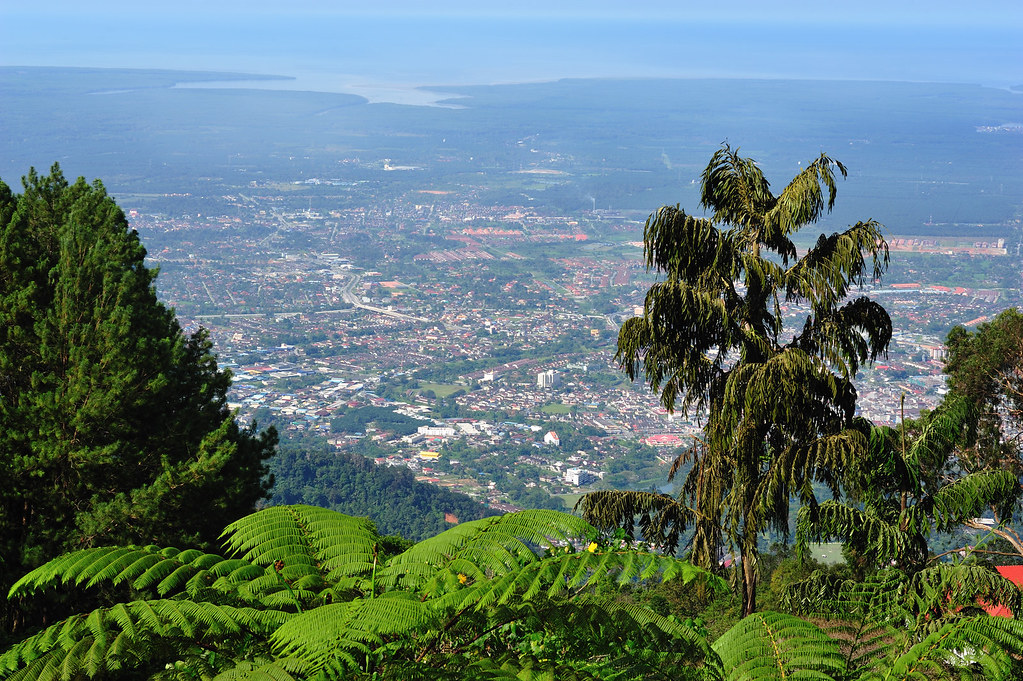
Taiping town as seen from the hilltop 


6) Penang Hill

Known as Bukit Bendera by locals, this hill station offers a breathtaking view of Georgetown, the rest of the island and even Butterworth in the mainland. Located 830 meters above ground level, Penang Hill also boosts a beautiful 150-meter canopy walk for visitors who wish to trek up the treetops. Also, Penang Hill is home to one of the oldest funicular systems in the world, which is being upgraded to serve a direct route to the hilltop.

A train going up the hill

The train station

5) Fraser Hill

Resembling more of a quiet Scottish village then a Malaysian small town, Fraser Hill is most famous for its granite Tudor buildings. Surrounded by its many English flower gardens and pine trees, the town's life mostly revolves around the market square. A small, moss -invested clock tower sits at the center of the square. Most of the Tudor cottages are private homes, but some of them have been converted into motels, a post office, a police station, a clinic, a tourist information center, cafes, restaurants, prayer houses and many more. Fraser Hill is also famous among wildlife enthusiasts and birdwatchers.

The town square

A former colonial bungalow now a private residence

Now a police station

Now a post office

A chalet

The iconic clock tower

4) Kundasang

Located about 6 miles away from the Kinabalu National Park, Kundasang offers visitors a scenic view of Mount Kinabalu. With is lush flowery meadows, green grasslands, blue-like mountain range, spotted cows and colonial architecture, Kundasang has often been described as resembling a small town in New Zealand. Despite being a very small town, Kundasang also provides facilities such as hotels, motels, chalets and holiday bungalows for the convenience of its tourists. There is also a Commonwealth memorial to remember those who lost their lives during World War II. Most villagers depend on agriculture as their main source of income.

The Crocker Range

Spotted cows

Desa Dairy Farm

Panoramic 

Kundasang Valley

War Memorial

3) Bukit Tinggi

Unlike the other hill stations on this list, Bukit Tinggi's weather is much warmer since it is only located less than 800 m above sea level. But what it lacks in weather, it makes up in other departments. Bukit Tinggi is most famous for housing Colmar Tropicale, the French-themed village located in the Berjaya Hills Resort's 80 acres of natural forestland. Mainly inspired by the town of Colmar in Alsace, France, the village resembles an authentic 16th century French small town. Apart from Colmar Tropicale, Bukit Tinggi is also home to a rabbit park, a Japanese garden and much more.

Colmar Tropicale

Very very French

Japanese Garden

A Japanese hut

2) Cameron Highlands

At 1500 m above sea level, this is one of the highest hill station in the country. It also is the largest hill station in the country, having as much as eight different towns. Cameron is most famous for its many butterfly parks, strawberry farms, cactus plantations, rose gardens, tea plantations, vegetable farms and much more. It is also known for its many British colonial buildings like the Smokehouse, the Convent school and many more. The temperature can drop as low as 16 degrees and the highest is only 24 degrees, adding more to its resemblance as an English hamlet.

Tudor architecture

Terraced tea plantations

Ye Old Smokehouse
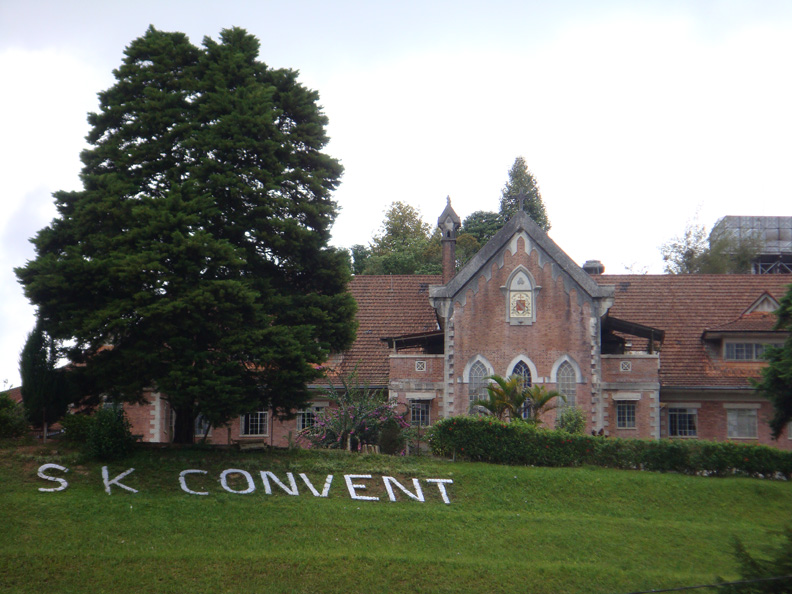
Convent Primary School
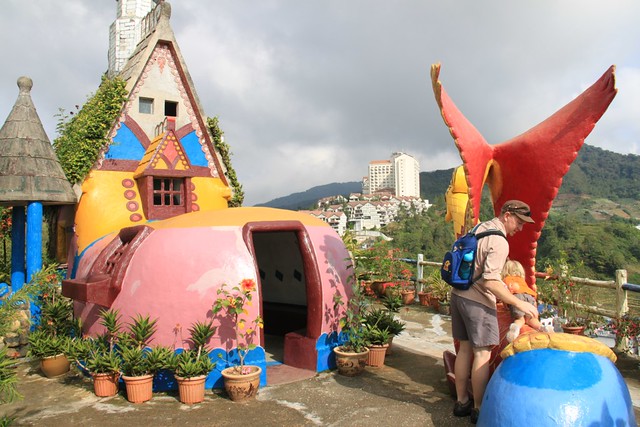
A cute playground

A flower garden

Heritage Hotel

A modest Hindu temple overlooking a tea plantation

1) Genting Highlands

Genting is different from other hill stations in the country. First of all, it was not opened by the British during colonial times, but was founded in 1965. It is more famous for its family theme park then for its wildlife and historical architecture. Genting is also the only place in Malaysia where gambling is legal, which earned it the nickname the Las Vegas of Malaysia. The resort houses a wide range of entertainment, leisure, recreational and sporting facilities as well as hotels, condominiums, apartments and camping facilities. At the foot of the hill is a golf course, a horse ranch, an eco-park and a cable car terminal which is the world’s fastest and Southeast Asia’s longest cable car; otherwise know as the 3.3 kilometer Genting Skyway.

Las Vegas of Malaysia

One of the largest hotels in the world

Genting Skyway

Sunday, October 27, 2013

Top 5 Most Beautiful Train Stations in Malaysia

Most of our country's railway stations symbolize our colonial heritage. They should be maintained and treated as antiques. Some of them have very unique designs that are rich in history. It is sad to see many being demolished today. But some are well-sustained, and are even given major makeovers. Here is a list of my Top 5 Most Beautiful Train Stations in Malaysia.

5) Johor Bharu Train Station

This station currently only handles Intercity trains. The city's main train station is now the newly built Johor Bharu Central. It also functions as the Malayan Railways' Southern Region Mini Museum. This station is very close to the Malaysia-Singapore Causeway. It has a much simpler colonial design than compared to the other stations in this list, but still much grander than most small train stations in the country.

Source: Google Images

4) Kuala Kangsar Train Station

Perak already houses two of the most historically valuable train stations in the country, the Ipoh and Taiping stations. The older Kuala Kangsar station is just as rich in history, but is allegedly too old to be retained and has been demolished to make way for the new station. The new station has striking middle eastern architecture, much like the town's Old Palace and mosque which is not far away from where it is located.

Source: Google Images


3) Anak Bukit Train Station

This is the new station in Alor Star and not the older colonial one with the iconic clock tower. The government almost demolished that one back in 2001 to relocate the station here in Anak Bukit. Thanks to protesting locals,  the station has been well-maintained ever since. It still remains as one Kedah's historical landmarks. The new train station of Alor Star is the Anak Bukit Train Station has Moorish features like the more famous Ipoh and Kuala Lumpur stations.

Source: Google Images


2) Ipoh Train Station

From the architecture, you can tell this station was designed by the same person who designed other iconic buildings in the country such as the Kuala Lumpur Railway Station, the Jamek Mosque, the Keretapi Tanah Melayu Berhad Building and the old Kuala Lumpur City Hall Building. Arthur Benison Hubback, the British architectural assistant to the Director of Public Works back during colonial times used to serve in India, and therefore made good use his knowledge in Anglo-Asian architecture on the designs. Opened in 1935, the station also has its own hotel for travelers; the Majestic Hotel. It is more commonly known among locals as the Taj Mahal of Ipoh because of its Moorish-Mughal design. The station was also one of the shooting locations for the 1999 Hollywood film, Anna and the King.


Source: Google Images

1) Kuala Lumpur Train Station

Today, this station only handles commuter trains while the newer, much larger KL Central serves as the city's main train station. Hubback once again opted for a Neo-Moorish design which he is famous for. Completed in 1920, the station represents how cosmopolitan Malaysia is as it combines both western and eastern styles, adding to its historical and cultural value. Its turrets are currently painted white.  The steel girders above the platforms have been well-maintained over the years although the interior has been renovated. Since 2001, the much larger  transit-oriented KL Central, which is also the largest train station in Southeast Asia has replaced Kuala Lumpur Railway Station.

Source: Google Images


Tuesday, October 8, 2013

Why Novels?

While other kids around me have always loved video games, sports, high-tech gadgets and other stuff most youngsters tend to love, I have always been in love with a slightly unusual, but not completely unheard of thing.

Novels.

I just love reading novels. It opens up me up to a whole different world. I can go on and on about how novels interest me but that will just bore you. So let me tell you how I came to loving reading books, especially novels.

There's this Malay saying that loosely translated into something about children being white cloths and it is the parents that choose their colours. Well, that is completely true in my case.

From a very young age, whether it was my birthday or I did well in a test, the reward would always be storybooks. Yes, that's right. No video games, no sporty stuff. Just storybooks.

Then, before I would go to bed, my parents would read me a storybook.

Going shopping? Let's stop by at the bookshop and survey any nice storybooks we could buy when they get their pay end of the month.

Oh, look! A new movie made adapted from your storybook! Let's go watch it!

So, yes. I am what I am today for many reasons, mostly because of my parents.

Sunday, June 30, 2013

Johor's Publicly Hidden 'Treasure'

I haven't been to the state of Johor, or anywhere near the southern part of Peninsular Malaysia. The most south I have been is Negeri Sembilan. But even I, a Perakian, know enough about this one thing about Johor that really amazes me. So much so that I feel the government should somehow commercialize it and make it a tourist attraction of some sort.


I am of course talking about Johor's most public secret appeal. It is not really an attraction because I have not heard of tourists going there to witness it themselves. But I am not the only one who find this amusing since there are countless pictures of this phenomenon online. What is it that I am talking about, you may ask?

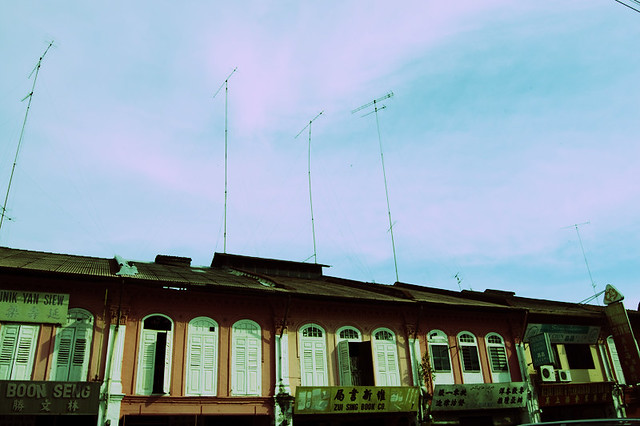
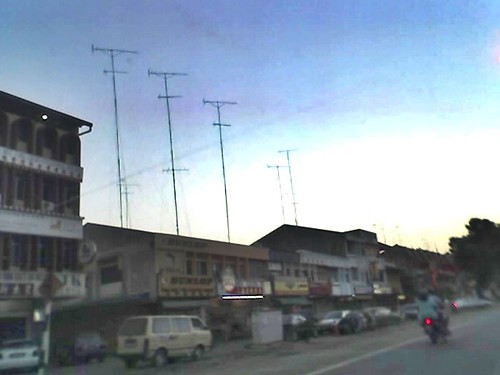
The high rising TV antenna phenomenon of course! Johoreans do this just to get Singaporean terrestrial free-to-air channels through terrestrial spillover! Just look at these amazing pictures!


I am still unsure if this phenomenon is unique to Malaysia. The more up north you travel from Singapore, the taller the fish bone antennas are. I simply find this fantastic. Maybe if not as a tourist attraction, maybe simply as part of our merchandising for souvenirs as a type of joke! Just a thought. =) 

The Good Father - My Thoughts on the Novel

Every father loves his child. No father would want to see his kid destroy his own life. Unfortunately, this is what happens to Dr. Paul Allen, a renowned medical specialist in the United States.

The story opens very innocently where we see Dr. Allen on his way home after work one evening. He comes home to the perfect family life -  his wife has dinner ready and their two twin sons are playing. Then, Dr. Allen finds out - from the news on TV and  the government agents at his door - that his eldest son from his first marriage, Daniel, had been arrested for allegedly assassinating the future president of the country.

From this point on, Dr. Allen's life changes. The government agents who have come to escort him are not reserved in showing that he does not deserve their respect, since he is the father of the assassin of a hugely popular political figure. His boss and colleagues at work who once respected him now avoid him at all cause.  He is even rudely interrupted in the streets whenever someone recognizes him. Even his wife starts to believe that her stepson might have really been the assassin.

But this does not stop Dr. Allen. He knows his son would never do something like this. He acknowledges the fact that Daniel is the result of a broken family, a terrible divorce. Most of his holidays were spent in airports and on airplanes traveling between two homes. Dr. Allen's ex-wife, though a reluctant single parent, insisted on having custody of him to convince society she is not a bad mother. Despite all the evidence that is brought before him, he works hard to find any conspiracy theory to discredit it instantly.

The story is narrated from Dr. Allen's point of view. We only see and judge Daniel through his eyes.

As the novel progresses, we see how deep a father's love actually can be. Dr. Allen never openly admitted to Daniel how much he loved him, or how much he placed his son's life above his. He regrets letting Daniel slip away by dropping out from college and travelling across the country. He notices how Daniel divulges in food each time they meet after Daniel is left penniless in the middle of his travels. But a father's love is different from a mother's. Dr. Allen lets Daniel be who he wants to be. Until his son's life takes a much more sinister turn.

When his wife reminds him he has two more sons to care for, Dr. Allen pretends to leave everything behind. However, he keeps a secret achieve of all the newspaper clipping and other information regarding Daniel's case. The determined doctor never gives up home, not even when his lawyer friend sees no chance of winning nor when Daniel himself threatens to not speak to him if he appeals the case. This is where you see even further how Dr. Allen goes the distance to prove his son's innocence; meeting with people Daniel stayed with or might have met during his trips.

The most heartbreaking part of the novel is late one night when Dr. Allen gets a phone call from Daniel at his detention center. Hoping that Daniel has finally changed his mind about appealing the case, the doctor is devastated to find out that a date has been set for his execution - Daniel will be drugged to death.

[[SPOILER ALERT!!!!!!!!!!!!!!!]]

This pushes the doctor beyond the point of desperation. For months he has been investigating Daniel's case like as a doctor diagnosing a patient. Now he does not even care if his son stops talking to him. He was going to appeal the case. But first he goes to Daniel's former university to see if he can discover anything at all that can save his son. Instead, he is approached by a mysterious figure who reveals that Daniel was indeed the one who assassinated the presidential candidate. All this mysterious man did was push him to the limit - sort of indirectly encourage him to perform the deed. And then, the man disappears.

Dr. Allen finally comes to terms with the fact that somewhere along the road of coming of age, Daniel lost his way and for some reason still unclear to anyone, pulled the trigger that killed a very important man. The last few pages of the book is most difficult to read. This story is in no way a bad one. It is actually the best I have read this year. But there is no poetic justice. Dr. Allen has been misleading readers all along; an unreliable narrator through and through. Though other characters pretty much see that Daniel was the killer all along, Dr. Allen refused to allow himself to believe that. Just like a doctor finding alternatives to cure his patient, the guilt-ridden father was constantly looking at other ways the events of that fateful day could have happened.

The only problem I had with the novel is that whole chapters, though only occasional, were used to narrate previous incidents relating to assassination and gun control in the United States. In my opinion, they had very little to contribute to the actual story of Dr. Allen;s quest to prove Daniel's innocence. The novel juggled between intimate themes like fatherhood and coming of age and even more political ones like conspiracy theories and gun control in the US. This is all very relevant in relation to the country's current socio-climate.


Tuesday, April 23, 2013

The Malaysian Airlines Flight Stewardess: History, Uniform and Ranks

Flight Stewardesses and Their Uniforms 

Flight stewardesses are known for their glamour and elegance, partly because of their uniforms. Most flight attendant’s’ uniforms, either for ladies or gents, may seem reflect the culture of the country that owns the airlines. For example, the flight stewardesses of Air India, Sri Lankan Airlines and Biman Airlines all wear saris. It might look uncomfortable and even inappropriate to wear such traditional attire at the workplace, but like other uniforms, they are designed to be both practical and durable. 

Sri Lankan Airlines stewardess uniform 

Most commercial aviation pioneers were of military background. This is probably why most of the earlier stewardess uniforms were generally not made to be aesthetically pleasing. Instead, they were made up of berets, caps, nurse shoes, jackets, epaulettes and brass buttons. This tradition is maintained by many airlines like British Airways and Qatar Airways. However, the marketing significance of female flight attendants began to develop in the late 1930s and early 1940s. This was when many airline companies started to assign established designers to create their cabin crews’ uniforms. 


A Bit of History  


Even our very own former Malaysia-Singapore Airlines (MSA) in 1968 commissioned a foreigner to design its cabin crew’s uniforms. He was not Malay, nor was he Malaysian or Singaporean. He was the French designer Couturier Pierre Balmain. As part of incorporating the indigenous Malay culture into the design of uniform, Balmain decided the sarong-kebaya would be most appropriate as the uniform. Borders from the edges of traditional Batik fabric were added around the hem, neck and cuffs. Till this day, the uniforms are tailor made by Singapore Airlines’s domestic tailors. In 1972, six years after the separation of Singapore from Malaysia, Malaysia-Singapore Airlines was renamed Singapore Airlines (SIA). A brand new Malaysia Airlines (MAS) was created. Since most of MSA's international routes were flown out of Singapore well-established airports, a huge portion of international routes were in Singapore Airlines’ hands. Even MSA's headquarters was located in the highly developed Singapore and immediately became that airline’s headquarters. SIA also kept 10 out of MSA’s 13 Boeing 707s, along with some 737s. Just like most of the now defunct MSA’s possessions, Singapore Airlines inherited Balmain’s high-end design and uses it till today. SIA expanded overnight, while MAS had to generally start from scratch with nothing more than domestic routes to grown on. 

How an MSA aircraft might have looked like


The Iconic Sarong Kebaya 


Malaysia Airlines developed its own stewardess uniform. Malaysian designer Andy Chiew designed the first set of Kebaya uniforms for the' cabin crew. His design was said to be the best out of nine sets of uniforms submitted. There were originally two sets of uniforms, either brown or green. as shown below.

The original MAS uniforms for stewardesses. 

The uniform used before the current one. 


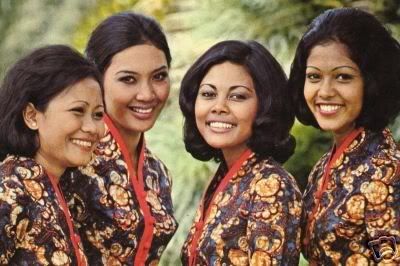
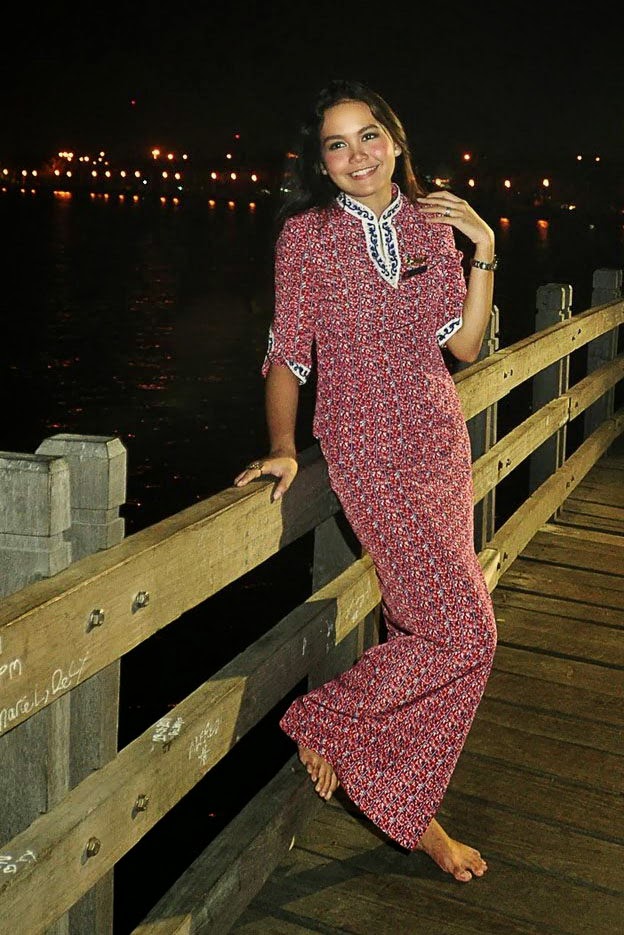
In 1986, Malaysia Airlines introduced its own original Sarong Kebaya uniform for female flight attendants. Designed by the School of Fashion at Mara University of Technology, it also incorporates Batik material with a bamboo weave pattern motif as the background. Malaysian flowers like the cempaka, jasmine and hibiscus leaves are superimposed on the design. Geometric Sarawakian patterns are used for the lapels of the top, sleeve edges and the sarong edges as well. Stewardesses wearing the hijab would wear a light green headscarf over their heads. Male flight attendants wear simple grey jackets. 

Just like all major airlines, both MAS and SIA have different uniforms for stewardesses of different ranks. 

Colour Code of MAS female flight attendants: 

1. Inflight Supervisors : Red with yellow flowers 

2. Chief Stewardesses : Green with pink flowers 

3. Leading Stewardesses : Green with pink flowers 

4. Flight Stewardesses : Green with pink flowers 

5. Ground front liners : Green with magenta flowers 

Uniforms for either chief, leading or flight stewardesses. 

The lady on the right is identifiable as an inflight supervising stewardess because of her red uniform.


Colour Code of SIA female flight attendants (Singapore Girls): 

1. Flight Stewardess     :Blue 

2. Leading Stewardess :Green 

3. Chief Stewardess      :Red 

4. In-Flight Supervisor  :Purple

The four different uniform types

Other Airlines with Stewardesses Wearing Kebayas

Royal Brunei Airlines

Malindo Airlines

Lion Air

Garuda Airlines

Monday, January 28, 2013

The Mount Matang Hindu Temple: Lost in Time and Revived Again

One day back in the 1960s, a Dayak hunter living in the outskirts of Kuching, Sarawak named Abi Benggali was walking through the jungle areas of Matang when he came to the slope of a mountain. To his surprise, he found a deserted but sturdy building structure there. The interior was made of belian wood, which strangely remained undamaged despite being abandoned for ages. From the relics he found inside, he finally realized that this was an old Hindu temple. He was most attracted to a carved wooden elephant and took it home with him. 


The very next day, Abi returned the wooden structure to the temple. His decision the day before to take it home with home proved unwise, as he suffered from terrible nightmares the night before. He talked about his strange discovery to the press. When the news of the discovery of a lost Hindu temple in the rain forest reached the ears of the local Hindu community, much effort was put in to unravel the mystery of this abandoned temple and to restore it to its previous condition.

A few elders from the local Hindu community revealed that the existence of the temple was not completely unknown to them. Their parents who first arrived in Sarawak in 1867 built the temple by using simple tools and belian wood from the surrounding jungle, dedicated the temple to the Mother Goddess Sri Maha Mariamman, or Amman. Some were even convicts from South India, banished to work in Sarawak in the mid-nineteenth century. The temple was mainly built by Tamil Hindus workers  from India and Ceylon recruited by the second White Rajah of the Sarawak Kingdom, Sir Charles Brooke through the Kangani system to work in his tea and coffee tea plantations on the mountain slope.


The Matang Coffee Estate was opened by the Brooke family t in 1867. The estate was managed in the same way as those more larger ones in Sri Lanka by a Superintendent, Mr. Anderson who had worked as an estate manager in Sri Lanka for many years and was specially hired by Charles Brooke.


Following the completion of the temple two to three years after the arrival of the Hindu workers, a priest from India was brought in to hold the consecration ceremony. More workers were brought in from India and Ceylon, and Brooke's 600 acre plantation employed more than a thousand workers during the height of his commercial success. The workers lived in barracks close by.

However, live was not all easy for the workers. They were oppressed by the foremen, also known as Kanganis, thus the name the Kangani system. The workers were very poorly paid. The local temple, like all other temples, functioned as the center of the community's social and religious activities.

It was later revealed through much research and interviews with the local elders that this Amman temple was not the only place of worship that the plantation workers built. There was another Murugan temple built as the number of Hindu workers increased. Some Catholic workers build a chapel for the Blessed Virgin Mary. There two prayer houses are yet to be located, though after almost two centuries, it is more likely that they have lost to the jungle.

The plantation was eventually closed in the early 20th century due to poor management and the workers were given a choice to either return to India or move to the now developing Kuching to work in road construction. Due to their bitter experience under the Kangani system, most of the older generation returned to India and Ceylon, while more than 50 families of the new generation, being born here and having lived in Sarawak all their lives, stayed back. The younger workers took the main bronze statue of Amman with them to a small shrine they had built near the Sarawak club in the city

As more Hindu workers were brought into Kuching to build roads, a small temple was build along Batu Lintang Road to serve their growing community. Decades later in 1991, a brand new Hindu temple was built in Road Rock, and the statue was relocated here permanently. Though the idol continued to be well-maintained, the temple in Matang was left forgotten. Had it not been built by belian wood, it would have completely collapsed.

As Abi's story went public, local Hindus in Kuching started to campaign to restore the colonial era temple. An expedition to its location in 1968 soon led to the path build by Brooke to be cleared. In its place, a proper road was built.


The renovation was completed on December 4th, 1970 and the high mass was attended by more than half a thousand members of Sarawak's small Hindu community. The temple was then placed under the administration and care of the Kuching Hindu Association of Ban Hock Road. 


In 2007, the temple once again went through another major renovation. The new Mount Matang Sri Maha Mariamman renovation committee rebuilt the temple with belian wood from the mountain, thanks to the permission granted by the Sarawak Forestry Department. Craftsmen from South India were brought in to carve the belian posts and plaster decorations on the temple walls. Apart from being a colonial heritage, the temple is probably the only Hindu temple in the world made of timber and the temple committee intends on maintaining that position.


In 2011, the renovation was completed and wall attended by hundreds of worshipers  Strangely enough, most of the temple's devotees today are Chinese merchants who have contributed to the temple through various donations. The government granted announced a grant of RM5 000 for the temple committee to carry out general maintenance of the temple as it recognized the temple as an important historical building.


The consecration ceremony was also attended by James Lionel Brooke and Jason Desmond Brooke, the grandson and great grandson of the third and last White Rajah, Charles Vyner Brooke.

His excellency James Lionel Brooke

Today, the temple remains as one of the most unique buildings in Sarawak, and Malaysia. A special thanks to the local Hindu community of Sarawak, the Kuching Hindu Temples Association and the Sarawak state government for its recognition of an important part of our country's colonial history.


Though the temple has been successfully reconstructed, there is one more nearby building that is yet to be worked on; the Brooke bungalow. It has been recorded that the Rajah and Ranee of the Sarawak Kingdom have steyed in the Coffee Estate for about three weeks in 1870. Visitors to their grand bungalow in the area have described the gentle gradient of the road contrived by the superintendent of the place; “The Rajah’s garden is arranged on terraces cut in the slope of the hill; there the roses bloom magnificently and the jasmine attains a luxuriance I have not yet seen. All the different flowers we have in Sarawak seem to thrive remarkably well.” Sadly today, it is nothing more than an old wooden building. Something needs to be done to restore this place too.