Thursday, October 29, 2015

Top 10 Parts of the Harry Potter Books That Should Have Been In The Movies

I often find myself caught up in arguments with people who claim that why should they read a novel, no matter how good it is, when there is a movie adaptation in the making. As a book lover, naturally I would disagree with the motion. I often cite the Harry Potter saga as a good example. Yes, the movies are incredible but it is the books that truly give the whole Harry Potter universe its magic. For instance, there are crucial parts from the book that are left out in the movies. The inclusion of these parts would have made the movies much darker and interesting, in my humble opinion of course. There are times where I wish the books were instead adapted into an HBO or Netlflix original TV series, where each season explores each book with much more depth. But I am getting ahead of myself. So, here is my list of Top 10 Parts of the Harry Potter Books That Should Have Been In The Movies in no particular order.

1. Professor Trelawney's First Prophecy 

In the movies, Neville is only given much importance in the final one. However, in the fifth book, we learn of a prophecy that led to Voldermort attempting to kill Harry. Professor Trelawney predicts that the only one who would have the ability to destroy the Dark Lord will be born at the end of July, 1980 to a set of parents who had thrice defied Voldemort and survived. This description fits both Harry and Neville. Since there were two babies who could fulfill the prophecy, Voldemort tried to eliminate both Neville and Harry at once. Fun fact: It was Snape, a loyal Death Eater at the time, who overheard the prophecy being made to Dumbledore at the Hog’s Head Inn and relayed this incomplete information to Voldemort. Only when he realized that he had unintentionally set his Dark Lord upon the Potters did he volunteer to become Dumbledore's double agent. For some reason, Voldemort saw his fellow half-blood as the bigger threat and chose to go after Harry himself while sending a group of Death Eaters after the pure blooded Neville.


2. Neville's Parents

Neville's backstory is just as tragic as Harry's. Around the same time Voldemort went after the Potters, he sent the Lestranges and Barty Crouch Jr to attack the Longbottoms. Neville's parents were tortured with the Cruciatus Curse and were eventually driven insane. Since then, Frank and Alice Longbottom have been institutionalized at St. Mungo's wizarding hospital, and Neville was raised by his grandmother. Although not as wicked as the Dursleys, Neville's grandmother keeps chiding him for not living up to his parents' legacy, partly becoming the reason for his lack of self-confidence during his early years at Hogwarts. Neville visits his parents regularly although they do not recognize their son.


3. Winky, The Crouch Family's House Elf

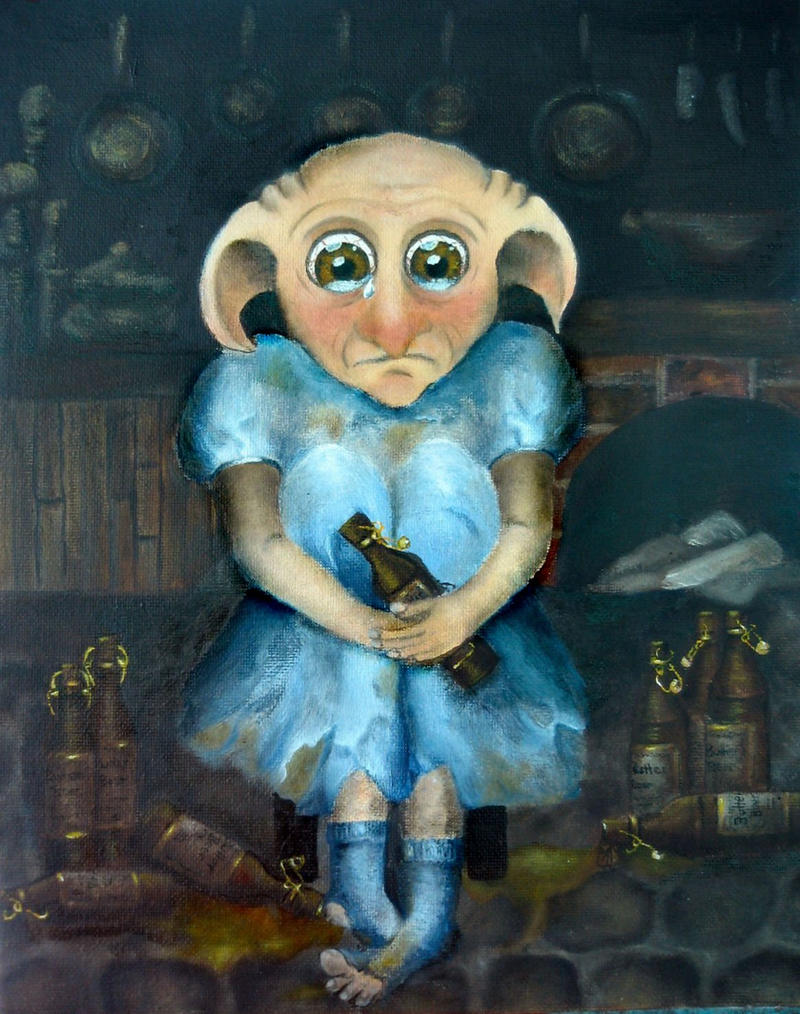
If there is a character that can truly capture the hardship elves face better than Dobby, it is the Crouch house elf, Winky. In the fourth book, she is sacked by Barty Crouch Sr. after he finds out that she failed to guard his fugitive son, Barty Jr. as instructed. Unlike Dobby who cherishes his freedom, Winky undergoes depression and turns to drinking when she relocates to Hogwarts. For years, she served the Crouch family loyally, even going so far as to care for the dangerous Barty Crouch Jr. who was put under his father's Imperius Curse to prevent him from rejoining the Death Eaters. Out of love for her young master, Winky successfully persuaded Barty Sr. to reward his son's good behaviour by taking him to the World Cup, which led to his escape and rejoining Voldemort. Despite Winky's screams and pleas, Barty Sr. coldly dismissed her. Barty Sr. mistreatment of the elf whose family loyally served his for generations led to Hermione setting up the Society for the Promotion of Elfish Welfare (S.P.E.W.) to fight for elves' freedom. Winky's depression worsens when she learns her older master had been murdered by her young one.

4. Peter Pettigrew's Death

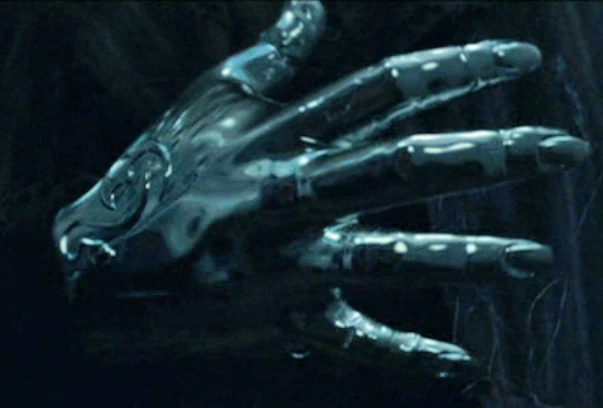
Throughout the book and movie series, Pettigrew a.k.a Wormtail is portrayed as nothing more than a cowardly traitor. Despite being their friend since Hogwarts, he was the one responsible for leading Voldemort to the Potters' location and then left Sirius Black to take the blame. After being exposed to have been hiding as Ron's pet rat for years, he escapes once again after Harry stopped Sirius and Remus from killing him. In the following book, Wormtail sacrifices his own hand in a ritual to resurrect Voldermort, and the Dark Lord would replace his hand with a beautiful silver one. All these are in the movies. However, what they left out was the part where Wormtail tries to prevent Harry from fleeing Malfoy Manor by strangling him. Only when Harry reminds him of the life debt he owes him does Wormtail stop. Then, that magical artificial arm of his strangles him to death for doing something right for once in his life and betraying Voldermort.

5. The Gaunts

It would have been interesting to see more of Voldemort's origin story since it is his family history that triggers his villainy. As revealed in the second book, Voldemort is a direct descendant of racist Salazar Slytherin. Only in the sixth book do we learn that his maternal family is the result of generations of inbreeding, which explains the mental instability that runs in the family. Merope, his mother, lived a horrible life under her racist father, Marvolo and psychopathic brother, Morfin. Desperate for human affection, Merope used a love potion on the handsome muggle, Tom Riddle Senior, who then left her after her spell weakened. Not wanting to return to her family who would kill her for eloping with a Muggle, the heartbroken Merope eventually succumbed to death at the orphanage that took a young Tom Riddle Jr. in. No wonder even Harry felt a bit of pity for Voldemort. A vengeful, teenage Voldemort would later return to the birthplace of his parents to murder his father's muggle family and frame his maternal uncle for the crime.

6. Petunia's Yearning For The Wizarding World

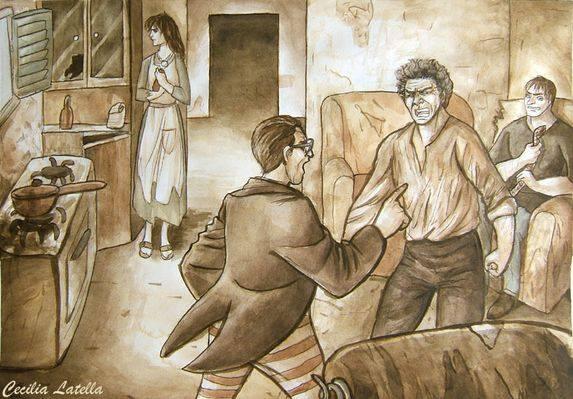
Petunia might have disliked her sister for having magical powers, but it was fueled more by jealousy rather than fear of the unknown. In the last book, it is revealed she even wrote to Dumbledore to accept her into Hogwarts, but he kindly turned her down. She also knows more about the Wizarding World than she cares to expose. She knows about Azkaban, Dementors and who knows what more. But that is not the end of their correspondence. Years later, after the Dementor attack on Dudley, Dumbledore sends Petunia a Howler to remind her that Harry must stay with her in order to remain protected by Lily’s bloodline.

7. Percy’s Feud and Reconciliation With His Family 

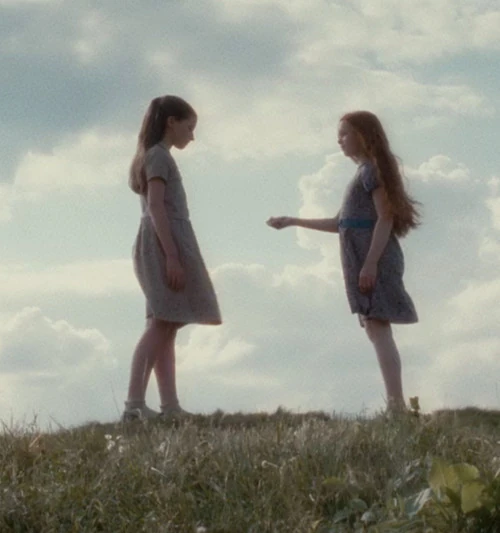
It appears that the Weasley brothers only have red hair in common. In other ways, they cannot be more different. Take Percy for instance. He is worlds apart from Fred and George. Just like his eldest brother, Bill, Percy was both a prefect and Head Boy during his time at Hogwarts. However, unlike Percy, he was very ambitious and chose his career over his family. His father did not take his quick rise through the Ministry of Magic lightly, as he saw it as a way for the Minister to keep a watch on the members of Dumbledore's Army. Percy ever wrote to Ron to congratulate him on becoming a prefect and advised him to keep away from Harry since he no longer sees eye to eye with the Ministry. Percy only sees the error of his ways after the fall of the Ministry and came to join his family during the Battle of Hogwarts. However, he did not have time to reconcile with his brother, Fred who dies during the fight.


8. Any Chance For Sirius?

Sirius' death in the fifth book marks the lost of the closest person to a loving family member Harry has after only two years of knowing him. In the last few chapters, we see how desperate he is to still keep Sirius in his life by looking at the magic mirror he has been given. He even goes to Nearly Headless Nick to ask if there is any chance Sirius would return to the human world as a ghost. Nick explains that only wizards who fear death might choose to return as ghosts, and such a fearless person like Sirius would unlikely do something like that despite his love for Harry. After apologising to Harry for not being of much help, Nick leaves for the End-of-Term Feast, leaving Harry further distraught.

9. The Marauders 

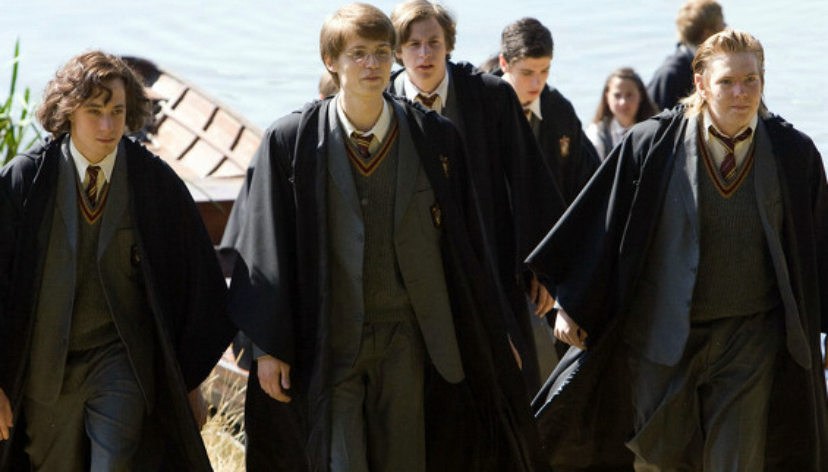
The Marauders are more than the inventors of the Marauder's Map. The movies ignored an entire backstory about James, Sirius, Lupin and Pettigrew's a.k.a The Marauders' school days. I mean sure there was that few-seconds flashback during Harry's Occlumency class which showed the four friends tormenting Snape, but that was it. There is a whole chapter on this in the fifth book. Since their best friend was a werewolf, James, Sirius and Pettigrew became unregistered Animagi just to keep him company. We know how things end for all four Marauders, but they were merely a bunch of really naughty and borderline mean students at school. Sirius almost caused Snape's death by luring him into the Shrieking Shack where Lupin was going through his werewolf transformation. It would have been interesting if the movies explored this a bit so viewers can see where Snape's mixed feelings for Harry comes from. 


10. The Life and Lies of Albus Dumbledore

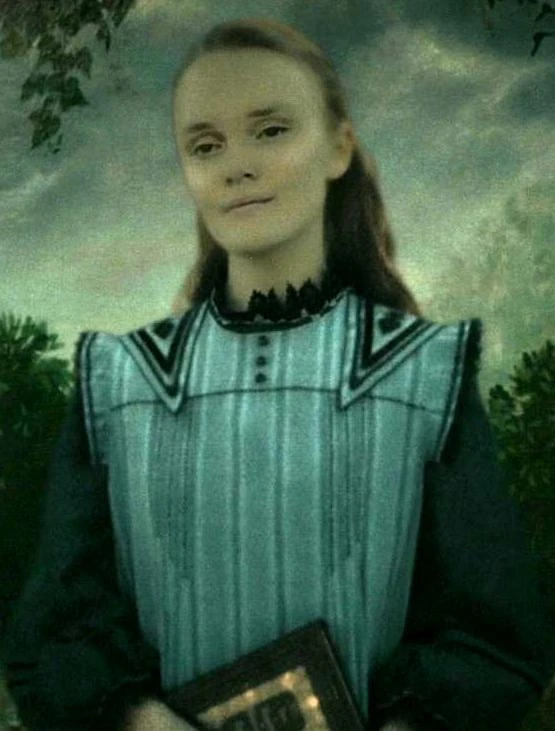
Another backstory that was left out of the movies, it would have been interesting to learn that the all-perfect Dumbledore was actually very much human. He is considered the most powerful wizard to have ever lived and was the only person Voldemort ever feared. There was a reason Dumbledore hardly mentions his family throughout the series. His early years were very much troubled. His father, Percival was sentenced to Azkaban where he later died after attacking a group of Muggle boys who harassed his daughter, Ariana when they witnessed her performing magic. His first few years at Hogwarts were met with rumours of him being as violent as his father. Despite this, Dumbledore grew to become an exceptionally excellent student, becoming Head Boy and making many other achievements. It was only after his mother's accidental death at the hands of his traumatized sister did his life take a turn for the worst. Back at his hometown, Dumbledore became friends with the overly ambitious Gellert Grindelwald who influenced him on world domination by wizards for the betterment of society. An eventual falling out between the two led to a violent duel, in which Ariana was caught between the crossfire and died. Grindelwald fled, leaving behind a devastated Dumbledore, who swore to never trust himself in matters of power. This is probably why he rejected offers on becoming Minister of Magic countless times. While Dumbledore became a professor at Hogwarts, Grindelwald went on to wreck havoc across the world. Dumbledore tracked his old friend down and defeated him in a duel, despite the latter possessing the all-powerful Elder Wand. Dumbledore kept the Elder Wand for himself while Grindelwald was imprisoned in Nurmengard. Years later,  Dumbledore managed to track down one of Voldemort's Horcruxes in the form of Marvolo Gaunt's ancestral ring, which was made up of the Resurrection Stone, which could allow anyone to communicate with the dead. Desperate to see his family again, Dumbledore forgot that the ring was cursed and put it on. Despite his great powers, the curse spread throughout his body. Knowing that he would die anyway, Dumbledore orchestrated his own death to save Harry and the rest of the wizarding world from Voldemort.
Saturday, June 13, 2015

Baahubali: Some Predictions on The Story

So the trailer for the latest Indian film, Baahubali has come out recently. Like most Tamil film trailers, it does not give audiences any idea on what the story is about, which is a good strategy as it heightens our curiosity. However, it compensates that by giving us snippets of the grand scale of its production. Most of the sets and special effects we see are most definitely a first in Indian cinema. 


The film is described as an epic war film. Despite its title, the film is not about the Jain religious figure which shares its name. As revealed by the cast and crew, the film is a fictional story and Baahubali literally translates into "the one with strong arms." Due to its length, the film is split into two parts, with this trailer being for the first part, hence its tagline "The Beginning." 

Here are screenshots from the trailer that might allow us to predict what the film's story is about. 
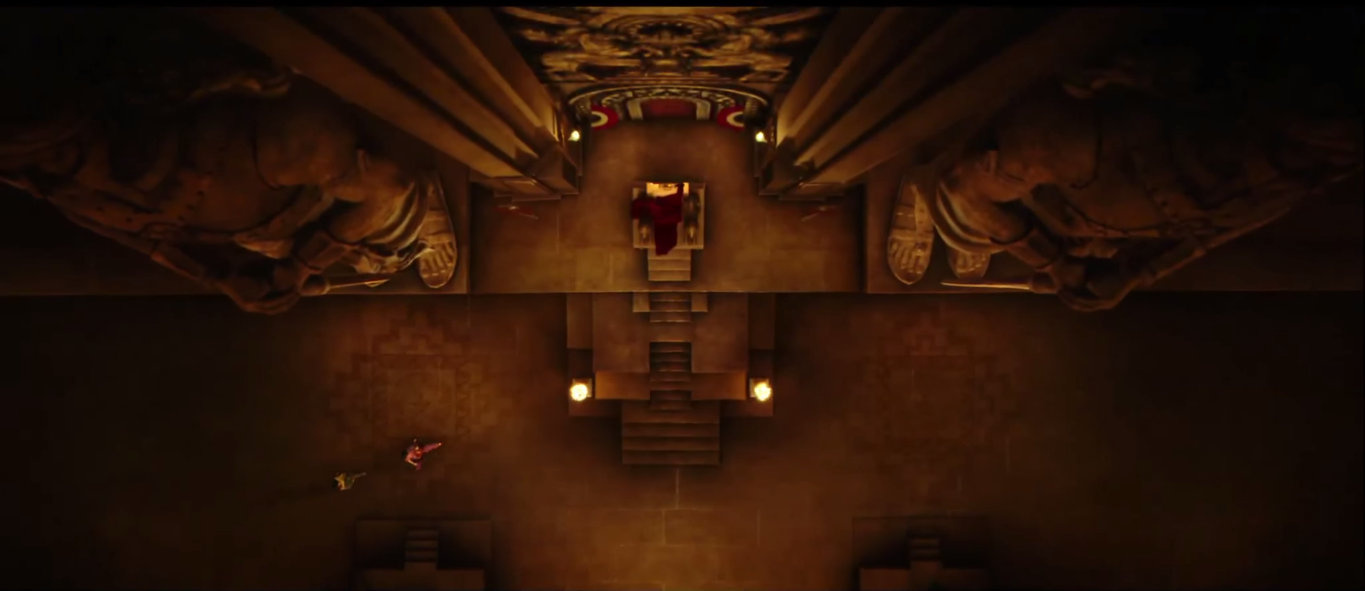
We are first shown an aerial shot of the kingdom where the story probably takes place. From an interview with Karan Johar, who will be releasing the Hindi version, it is hinted that film is probably based on Vedic stories. 

 From interviews, members of the cast and crew reveal that the story is about the battle of two brothers, Shivudu and Palvaalthevan for their kingdom's throne. 

Seriously, the graphic shots are simply stunning. 

Anushka Shetty plays Devasena. This is perhaps her only scene in the trailer. She probably plays the love interest of the older character Prabhas plays, now imprisoned after her stepson, Palvaalthevan has taken over the throne. 

There is no information on what character Rohini plays. From her costume, one can speculate that it is a tribal woman who probably adopted the younger Prabhas after he was banished from the palace or maybe survived a murder attempt. 

 The first shot of Prabhas who plays dual roles - Amarendra Baahubali and Shivudu. Both characters are probably father and son, with the latter being Devasena's husband and might have been murdered in a plot to take over the throne. 

Growing up in a jungle tribe, it is apparent that Baahubali is a very strong and agile young man. Imagine watching this scene in the cinema in 3D with the accompanying background music!

This looks like what might be scenes from a fantasy duet between Baahubali and Avanthika, the warrior princess played by Tamannaah, the second female lead.  

Hopefully the song sequence fits in well with the story and is not forced into it for commercial value. A film of such a big scale deserves to be given a mature treatment if it is to be appreciated across India and the Indian diaspora. 


There are scenes with snow, showing that the film not only takes place in ancient South India. This surely gives the story and the film as a whole a much richer look. 

One of the first scenes of war. Large sets were erected in Ramoji Film City in Hyderabad to shoot certain war sequences like this one. 

There is no information on whose statue this is since both Prabhas and Ranaa spot relatively similar looks in this film. 

There is a possibility this is the older Prabhas, Amarenda Baahubali, before being killed by his enemies. One line in the trailer even describes a character, albeit off camera, as Bahubaali's son. 

Another CGI-enhanced scene that can simply take your breath away. The production quality clearly surpassses that of the director SS Rajamouli's previous endavour, Maaveeran. 

 Sathyaraj sports a Tonsured look for his role as Kattappa in the film . From the look of the sword, it is safe to say the production team did not leave out a single detail in making sure every cent of the budget was used to the fullest. 


Nassar plays Pingala Devan, a negative role with a disabled arm. He described his role as the main catalyst behind Palvaalthevan's evil doings, maybe like what Shakuni is to the Kauravas. 

You just have to check out this CGI bull! 

Many characters in the trailer spot from Shivite looks. Even Prabhas is seen holding a large Shiva Lingam over his shoulders in the movie poster.  

Watch the trailer in HD on YouTube. Almost every scene like this looks like a beautiful painting depicting South Indian civilization in medieval times. 

"Who am I?!" Prabhas screaming this line put many fans to rest who were worried this was just a Telugu film dubbed into Tamil. 

Ranaa admitted he was chosen for the part because of his looks. The filmmakers had to go with an actor that could match Prabhas' height and physique if they wanted the film to have a proper villain. 


It is easy to see how epic this war scene is going to be. 

The trailer has many snippets of the various war sequences in the film. They do see in par with those in Braveheart and Ben-Hur. 

 Actress Ramya Krishnan plays Sivagami, another important role in the film. She might be the stepmother of Shivudu and mother of Palvaalthevan. Seeing how close she seems to a younger Pingala Devan, she could be related to him, maybe his sister.  

It is hard to say with all the makeup, but this might be weapons merchant Aslam Khan, the character played by Sudeep. It is reported that he will have a fight scene with Sathyaraj's character. 

From the look of the film, let's hope it has more of a dark and gritty vibe similar to historical epics such as Gladiator and Asoka rather than the playful nature of typical Indian ones. 

A lot of work must have gone into shooting battle scenes such as this one. 


For his role in the film, Ranaa had to go on a strict high-protein diet and intense muscle bulking to match his co-star, Prabhas' sturdy figure. 

  For each role, Prabhas is reported to spot two different looks; a large, beefed-up body for Baahubali's character, and a a more lean frame for Shivudu.

Some battle shots from the trailer like this one does remind us of the Hollywood flick, 300, although this film might not be as violent as that one to attract family audiences. 

If you haven't already, feel free to feast your eyes to the film's trailer below:

Top 10 Uprisings That Would Have Changed Malaysia

1) 1915 Sepoy Mutiny

Also known as the Mutiny of the 5th Native Light Infantry, almost 900 Indian soldiers known as Sepoys went against the British in Singapore during World War I. Lasting almost seven days, the mutiny resulted in the deaths of almost 50 British soldiers and locals. The threat of the mutiny was finally neutralized by the involvement of the Allied forces' navy. Since there are no existing reports on the Sepoys during their trial, the cause of the mutiny still remains unknown till today.

Alternate reality: However, had it been successful, the British would have lost control over Singapore, its main colony in the region, and the uprising would have spread all across Malaya and other British colonies and protectorates in the area.

The public executions of convicted Sepoy mutineers at Outram Road, Singapore in March 1915.


2) Rise of the Johorean Royalists

Before independence, the Anglophile Sultan Ibrahim of Johor was uncomfortable with his state being part of the Federation of Malaya. He wrote to The Straits Times in 1953 voicing his doubts on Johor's future as part of an independent Malaya. He supported the continuation of Johor as an independent British protectorate with its own British Adviser.The Sultan's supporters soon formed a secessionist movement called Persatuan Kebangsaan Melayu Johor (PKMJ) with the Sultan's relative, Ungku Abdullah bin Omar as its president. However, the Alliance Party's influence under Tunku Abdul Rahman's leadership proved to be too powerful, and Sultan Ibrahim moved to London, leaving behind crown prince Tunku Ismail as regent. Ungku Abdullah urged Tunku Ismail to not sign the Malayan Federal Constitution but was ignored. Tunku Abdul Rahman then invited Sultan Ibrahim to become the first Yang di-Pertuan Agong of Malaysia, but the Sultan declined allegedly due to old age and his wish to spend his final years in retirement. With most of his party members crossing over to the Alliance, Ungku Abdullah disbanded his party before independence.

Alternate reality: Had Tunku Ismail not sign the Constitution, Johor would not have become part of Malaya and even Malaysia.

His Royal Highness Sultan Ibrahim of Johor

3) Indonesia Raya Sentiments

Following the end of the Japanese Occupation, the British returned and worked together with the Malay aristocracy and conservatives to form a new united Malaya which would guarantee their economic interests would be protected. Fearing that anti-colonial sentiments would inspire an open armed rebellion similar to the fight of independence against the Dutch in the East Indies, the British had to compromise with royals and conservatives to limit rights for immigrant groups while still delaying independence. Meanwhile, certain left wing organizations

Alternate reality: Had the British refused to work together with the aristocracy and conservatives to launch pro-British politics, the idea of Indonesia Raya would have caught on and Malaysia and Indonesia would have become one big country.

The concept of Indonesia Raya


4) All Malayan Hartal

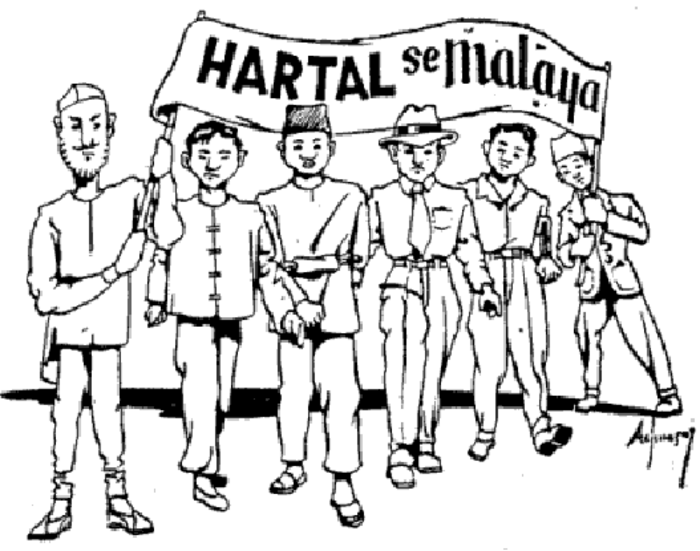
After World War II, the British were ready to leave their colonies, but not without guaranteeing their local strategic and economic interests would be well protected. Therefore, they resolved to leave behind pro-British governments to succeed them. To ensure the cooperation of the Malay aristocracy and conservatives in Malaya and protect their military bases in Singapore, the British split off Chinese-dominated Singapore from the rest of Malaya and governing it as a crown colony. Many anti-colonial organizations came together to form the All Malaya Joint Council of Action and proposed their own People's Constitution, that not only called for Singapore to be part of Malaya, but for more accessible citizenship for immigrant groups and all Malayans to be called Malays. This would ensure a clearer path towards independence. The Council then organized the All Malayan Hartal to protest the British and it was a grand success both in Malaya and Singapore. However, the British did not grant any concussions to the Council when the radical Malayan Communist Party, which was a member of the Council, decided to launch an armed rebellion. With the declaration of the Malayan Emergency, the Council was dissolved and other left wing organizations banned out of fear of Communist influence. Since then, Malayan politics was dominated by conservatives and pro-British groups. Just like the Malayan Union, the Federation excluded Singapore, despite its traditional links to Malaya.

Alternate reality: Had the British taken Hartal seriously, another coalition of political parties would have been chosen to rule an independent Malaya. Also, Singapore would continue to be politically and socially similar to the rest of Malaya, allowing it to stay within the federation.

A cartoon poster of Hartal.


5) Penang Secessionist Movement 

In the 1940s, the British proposed to amend the Banishment Ordinance, which would allow the government to banish those born in the Straits Settlements to their ancestral homeland. This made many Straits Chinese in Penang unhappy as they viewed Penang as their home and not China. Furthermore, the term 'pendatang' or 'foreigners' used by Malay conservatives was particularly offensive to them who saw Penang as their one and only true home. Also, the Straits Chinese associated themselves more with the British rather than with the Malays of the mainland. All these led them to initiate a secessionist movement. However, the secessionist movement eventually died out following the Malayan Emergency when the British started to ban all left-winged movements in an attempt to combat Communism.

Alternate reality: Had the secessionist movement been successful, Penang would have been a British Overseas Territory with Queen Elizabeth II as its monarch, or maybe an independent republic like Singapore.

Penang in the 1940s. 


6) Malayan Emergency

Despite being labelled an 'emergency' to allow tin mining industries and rubber plantations to claim losses, this Communist uprising was a full-fledged guerrilla war. Termed as the Anti-British National Liberation War by the Malayan Communist Party (MCP), this conflict between its military arm, the Malayan National Liberation Army (MNLA), and the Commonwealth armed forces lasted from 1948 to 1960. It ended with the Communists' defeat. This still remains the only war where the West won and the Communist lost.

Alternate reality: Had this war been won by the MNLA like the Vietnam War, Malaysia would have become the Communist People's Democratic Republic of Malaya with Singapore in it and things would have been radically different then they are now.

Malayan and New Zealand soldiers on a jungle patrol, c1957


7) Anti-cession movement of Sarawak

After the Jappanese Occupation ended, Sarawakian king, Rajah Charles Vyner Brooke ceded his kingdom to the British as a crown colony. This was a violation of a provision in the 1941 Constitution of Sarawak which specified self-rule for the kingdom if the heir apparent Anthony Brooke was not crowned the next king, which its citizens had expected to lead to independence. Without consulting the indigenous people or the consent of local leaders, the British declared Sarawak a crown colony on 1 July 1946. In retaliation, a secret organization called Rukun 13 assassinated the Sarawakian British Governor. But still, the British ruled Sarawak until it was given self-rule on the 31st of August 1963 and the subsequent formation of Malaysia on 16 September that year.

Alternate reality: Had the anti-cession movement succeeded, Sarawak would have become a British protectorate with Anthony Brooke as king. If the state still joined Malaysia, we might have had a white Agong too if that is even possible.

A demonstration in Sarawak. 


8) Brunei Revolt 

The Brunei People's Party supported joining the Federation of Malaysia. However, it feared the domination of the political influence of Malay supremacists in Malaya (now Peninsular Malaysia) and the economical power of Chinese merchants in Singapore. Therefore, it had one condition; all three Borneo territories, which are Brunei, Sarawak and North Borneo (now Sabah) were to be unified to form one state - North Kalimantan under one sultan, the Sultan of Brunei. That way, the 1.5 million natives of these states will be powerful enough to resist any political or economical domination. Before elections were even held in Brunei, the Brunei People's Party formed a military wing called the North Kalimantan National Army which organized the Brunei Revolt. Once the North Kalimantan Army was defeated and the Brunei People's Party leaders exiled, the Sultan of Brunei subsequently decided to not join Malaysia.

Alternate reality: Had the Brunei Revolt not taken place, Brunei would have become another state in Malaysia. Also, there would not have been Sabah or Sarawak, but a larger state called North Kalimantan with its own Sultan.

The 50th Anniversary of the Brunei Revolt


9) Malaysian Communist Insurgency

Despite the Malayan Natonal Liberation Army's defeat in 1960 at the hands of the Commonwealth armed forces, the Malayan Communist Party's leader Chin Peng renewed the insurgency seven years later. Known as the Communist Insurgency War, this second Communist uprising also failed even though other Commonwealth forces had withdraw from Malaysia by then. The Insurgency ended in 1989 with the signing of the Peace Accord in Haadyai, Thailand and the 1990 Bintulu peace agreement.

Alternate reality: Similar to the Malayan Emergency, had this second Communist uprising been successful, there is that possibility that we would have become a Communist republic.

The National Monument being repaired after bombings by Communist Militants. 


10) Rise of Singapore

While Singapore was a state within Malaysia, it started to see that there was no economic advantage to them. The main reason why Singapore was so desperate for a merger in the first place was because it believed it could not survive with the resource-rich hinterland that is Peninsular Malaysia. The Malaysian constitution was almost rewritten, transforming Malaysia from a federation into a confederation with the federal government providing more autonomy to the state government. Singapore's state government was to have all the powers it owned during its years of self-government between 1959 and 1963 before joining Malaysia. The federal government would only be in charge of defence and foreign relations, just like the British had been. Both federal and state governments would share internal security responsibilities. Also, Singapore citizens would be disallowed to participate in politics outside the island and mainland Malaysian citizens would not be allowed to take part in the island-state. This sounded like a good idea, but the federal government still wanted Singapore to contribute its tax revenue to the federal government. This meant Singapore would almost be like another country's colony again, only this time Malaysia's and not the British's. In the end, Singapore's separation from the rest of the federation was inevitable.

Alternate reality: This means had the merger continued, Singapore would be to Malaysia what Hong Kong and Macau are to China these days.

A Straits Times headlining the expulsion of the state.